Monday, 18 April 2016

News Article 35

'Drone' hits BA Plane: Police investigate Heathrow incident


A British Airways A320

A police investigation is under way after a passenger plane approaching Heathrow Airport was hit by what is believed to have been a drone.
The British Airways flight from Geneva, with 132 passengers and five crew on board, was hit as it approached the London airport at 12:50 BST on Sunday. If confirmed, it's thought it would be the first such incident in the UK.
BA said it would give the police "every assistance with their investigation". No arrests have been made, police say.
The Metropolitan Police's aviation security unit based at Heathrow will lead the investigation.
After safely landing the plane, the pilot reported an object - believed to have been a drone - had struck the front of the Airbus A320. A BA spokesman said: "Our aircraft landed safely, was fully examined by our engineers and it was cleared to operate its next flight."
A Civil Aviation Authority (CAA) spokesman said it was "totally unacceptable" to fly drones - which are generally used to capture aerial film or photographs - close to airports.
Steve Landells, from the British Airline Pilots Association (Balpa), said it had been "only a matter of time before we had a drone strike". He called for greater enforcement of existing rules.

History of Television


1922
18 October: British Broadcasting Company Ltd formed
1 November: Broadcasting licence fee introduced - initially costing 10 shillings
14 December: John Reith appointed General Manager of the British Broadcasting Company, 
a few months 
after the official start of British broadcasting. In 1927 he becomes director general of the 
British Broadcasting Corporation.
1923
28 September: Radio Times first published
1925
30 October: First television transmission of a human face (William Taynton) made by 
John Logie Baird in London
1926
26 January: John Logie Baird demonstrates wireless TV transmission to the Royal Institution in
 London
January: John Logie Baird demonstrates television
1927
1 January: British Broadcasting Corporation is established with newly-knighted Sir John Reith as 
director general
24 May: John Logie Baird demonstrates transmission of television pictures over telephone lines from 
London to Glasgow
Royal Television Society formed in London.
1928
3 July: John Logie Baird transmits colour television images using a 15-line system
1929
5 March: John Logie Baird transmits television from a BBC transmitter in London
20 August: First television broadcasting trials by BBC, using John Logie Baird's 30-line equipment
1930
14 July: First experimental television play, The Man With a Flower in His Mouth
1931
3 June: First television outside broadcast - John Logie Baird televises the Derby
1932
15 March: First broadcast from Broadcasting House, London.
1936
26 August: Demonstrations of the John Logie Baird and Marconi-EMI systems at the Radiolympia 
exhibition in London
2 November: BBC officially launches the world's first regular high-definition television service. 
For a trial period, the 405-line Marconi-EMI system and the 240-line John Logie Baird system are used during alternate weeks
1937
12 May: George VI's coronation procession televised - the first use of TV outside broadcast van
21 June: Wimbledon tennis championships are televised for the first time             
1938
21 March: The first television news bulletin is broadcast, although the transmission is voice-only 
radio-style
2 April: The Oxford and Cambridge Boat Race televised for the first time
3 April: BBC begins first Sunday broadcasts
30 April: FA Cup Final televised for the first time
9 June: Trooping of the Colour first broadcast on television
30 June: BBC director general John Reith resigns
16 November: First live television broadcast of a West End play, J.B. Priestley's 'When We Are Married'.
1939
1 September: BBC television service shut down at the outbreak of war. There are concerns that TV 
transmissions could be used as a homing signal by the German airforce
3 September: BBC television transmissions cease for the duration of World War II
1941
23 December: John Logie Baird gives the first demonstration of 600-line electronic, stereoscopic 
television in colour
1946
7 June: BBC television service resumes broadcasting after a seven-year hiatus. A combined £2 
radio/TV licence fee is introduced
7 July: Children's television begins with For The Children
1947
11 February: Television broadcasts are temporarily suspended due to the fuel crisis
20 November: Wedding of Princess Elizabeth and the Duke of Edinburgh broadcast
1948
29 July: Olympic Games are televised from Wembley
1949
29 July: First televised weather forecast
1950
12 February: European Broadcasting Union founded.
23 February: General Election results reported on television for the first time
1953
2 June: the coronation of Queen Elizabeth II is watched live by about 20 million people in 
Britain and as many as 200 million worldwide
11 November: current affairs programme Panorama is launched; goes on to become the longest-running 
programme on British TV
1954
1 January: the Tournament of Roses parade at Pasadena, California, USA, becomes the first programme ever 
broadcast coast-to-coast
9 April: Britain's first TV soap opera, The Grove Family
1955
22 September: first TV advert in the UK, for Gibbs SR toothpaste
1957
25 December: the Queen's first annual TV Christmas message broadcast
1961
3 May: The first episode of Coronation Street aired.
1969
21 July: first live broadcasts from the Moon (Apollo XI)
15 November: BBC1 and ITV start broadcasting in colour
1981
1 August: MTV launched; The Buggle's Video Killed the Radio Star the first music video to be 
broadcast
1989
5 February:  Sky begins satellite broadcasting in the UK
1997
9 November: BBC1 begins broadcasting 24 hours a day, seven days a week
2000
18 July: the UK launch of the first series of Big Brother starts a fashion for reality TV
2006
Channel 4 starts 'catch up TV' by going on 4 on demand allowing free dowload using the wifi.
2007
BBC and ITV also become available online
Netflix starts
2009
Netflix becomes available on iphone and ipad
2014
Netflix reports 50 m users

Monday, 14 March 2016

News Article 34

Budget 2016: Low-paid workers to receive savings bonus


Pound coins
Millions of low-paid workers who put aside savings could receive a top-up of up to £1,200 over four years, the government has announced. Employees on in-work benefits, such as tax credits, who put aside £50 a month would receive a bonus of 50% after two years - worth up to £600. That could then be continued for another two years with account holders receiving another £600.
Meanwhile, the national minimum wage is also set to increase from October 2016. The measures will be detailed in this week's Budget, in which Chancellor George Osborne has already warned of spending cuts.
He said that the UK had to "act now rather than pay later" and that the UK would see cuts "equivalent to 50p in every £100" of public spending by 2020, which was "not a huge amount in the scheme of things".
Labour shadow chancellor John McDonnell called for more long-term investment, specifically in skills, infrastructure and new technology, to enable the UK economy to "withstand the global headwinds". The government said that research showed almost half of UK adults had less than £500 set aside for emergencies.
It said the savings scheme, known as "Help to Save", would be open to around 3.5 million adults who received universal credit or tax credit. They would be able to withdraw the money if necessary and there would be no restrictions to how it could be used.
If the maximum amount was paid in to the scheme over four years, it would mean savings of £3,600, with £1,200 coming from the government.
Prime Minister David Cameron said: "I've made it the mission of this government to transform life chances across the country... That means giving hard-working people the extra support they need to fulfil their potential."
The "Help to Save" accounts will come into effect by April 2018 , with consultations on how exactly it will be implemented to begin shortly after the Budget.

Monday, 7 March 2016

News Article 33

Bailey Gwynne case: Trial told victim had 'No Chance'

A teenager who died after being stabbed in an Aberdeen school had "no chance", a murder trial has been told.
Bailey Gwynne, 16, died after being stabbed in the heart at Cults Academy last October. The accused, who is 16 and cannot be named for legal reasons, denies murder.
Advocate depute Alex Prentice QC, prosecuting, told the jury during his closing speech at the High Court in Aberdeen: "Bailey Gwynne had no chance."
He said: "This was a lethal wound inflicted by a lethal weapon." 
He said it was a "silly trivial fight between two schoolboys".
Mr Prentice started by asking the jury: "Why do you think a young man would carry a knife and a knuckleduster?"
He added: "You would have to have hearts of stone not to be moved by the emotion of this trial, but you must put emotion aside." Mr Prentice asked the jury to convict the accused of murder, but added they could convict of the lesser charge of culpable homicide. He also asked for guilty verdicts on the two charges of having knives and knuckledusters in school.
Mr Prentice said: "There was a stab wound to the heart inflicted by a lethal weapon that was routinely carried. "It may be everyone in this room wishes they had the power to turn back time.
"If we could do that, what would we do? We would say 'get rid of the knife, school is no place for a knife'.
"This case demonstrates the dangers of carrying a knife. If you have a knife you have the ability to use it."
Defence counsel Ian Duguid QC said the jury was dealing with a "spontaneous event" which lasted about 30 seconds. Mr Duguid said the accused had shown "extraordinary stupidity" but suggested Bailey Gwynne had shown "recklessness" in assaulting a fellow pupil.
Mr Duguid said a "trivial" matter started the fight, but said the accused was not a "fighting boy". He said: "Of course if he did not have a knife that day there would be a burst nose and a fat lip but for who? Bailey Gwynne? I don't think so."

Amy: The Girl Behind The Name


Amy directed by Asif Kapadia is a 2015 British documentary film that follows the life and death of British singer Amy Winehouse. It shows who Amy truly was as a person vs how the media portrayed her. She was presented through home videos with a voice over of different people who knew and spent time with her. They described her as a person and also in some parts how others treated her.

This film could be used as a case study because it covers a variety of different representations. It incorporates the representations of gender, issues and age. Gender is a strong representation in the film with a strong theme of dependency arising. Amy depends on men in her life mainly because of her lack of a relationship with her father, this has caused her to become needy towards other males. She further becomes heartbroken when going through a break up which destroys her further. 

The music industry was took a huge impact on both her rise and fall in the industry. Without the music producers in the industry Amy wouldn't have made it in the industry but that is so for all music artists who all need someone already in the industry to help them join. But the industry was also one of the biggest reasons for her fall and destruction because of how much they were asking from her. They tried to change Amy into something she wasn't, she only wanted to be herself something which the industry wouldn't allow her to do. They would also try to rush her into creating albums etc. something she planned to take her time with.

I think the audience responded to Amy well because she was so natural, and was easy to relate to as she was like any other girl expect she had a strong talent in singing. Also because she didn't try to make herself out to be someone she wasn't she appealed to the audience further because she was down to earth. She was quite like Adele who doesn't change her self because of what people want to see. 

Technology took a huge impact on Amy allowing her to get further recognition within the media. The use of TV interviews showed the audience the real Amy. But with things such as radio her songs were played allowing her popularity to rise. However the heighten of technology in this century has enabled more listeners to her music with social media and music streaming such as Spotify. But this was unavailable when she was alive so she was unfortunately unable to use these services. 

Overall I enjoyed the film and thought the way it was put together was very creative and different to the majority of documentaries. The use of home videos allows the audience to see Amy behind the camera rather than who they tried to make her. 

Monday, 29 February 2016

News Article 32

Oscars 2016: Leonardo DiCaprio finally wins an Oscar

Leonardo DiCaprio has finally won his first Oscar for survival epic The Revenant, after six nominations.
He was named best actor at the 88th Academy Awards, with Brie Larson named best actress for Room.
Spotlight took home the best picture Oscar with Mad Max: Fury Road picking up the most awards of the night, with six accolades.
Mark Rylance won the best supporting actor Oscar, with fellow Briton Sam Smith winning best original song.


Image copyright

'Is Hollywood racist?'

The ceremony had been boycotted by some Hollywood figures protesting about the lack of ethnic diversity among this year's nominees, as all 20 nominees in the best acting or supporting acting categories are white.
Host Chris Rock addressed the controversy head on as he launched the ceremony, and it was a theme that was returned to several times during the night.
Rock commented he had "counted at least 15 black people" in the montage that opened the ceremony, before welcoming people to the "white People's Choice awards".
"You realise if they nominated hosts, I wouldn't even get this job," he quipped. "Y'all would be watching Neil Patrick Harris right now."
Rock added: "Everyone wants to know is Hollywood racist? You have to go at it the right way. Is it burning-cross racist? Fetch-me-some-lemonade racist? No.
"It's a different kind of racist. Is Hollywood racist? You're damn right it's racist but it's sorority racist. It's like: We like you Rhonda, but you're not a Kappa.''
Among the winners for Mad Max: Fury Road - nominated for 10 Oscars including best director for George Miller - was British designer Jenny Beavan, for best costume design.
The Revenant won three of the 12 awards for which it was nominated. Alejandro Inarritu also won best director and Emmanuel Lubezki won his third Oscar for cinematography in a row, having won in 2015 for Birdman and 2014 for Gravity.

Monday, 22 February 2016

News Article 31

Kesha denied legal request to escape contract with man she alleges raped her


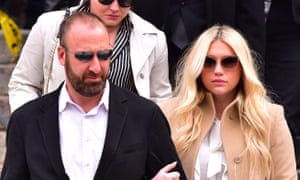
Kesha leaves the New York State Supreme Court.


Singer cried as judge ruled contract with Dr Luke’s record label will remain intact despite Kesha’s allegations that he physically and sexually assaulted her.

Kesha filed a lawsuit against Luke, whose real name is Lukasz Sebastian Gottwald, in 2014, claiming that the physical and sexual abuse began soon after she signed with him in 2005, when she was 18.
In the lawsuit, Kesha alleged that Luke plied the singer with drugs and alcohol before making sexual advances toward her. Kesha claimed that on one occasion, Gottwald gave her “sober pills” during a drinking session, and that she later woke up naked in his bed, unable to recall how she got there.

Gottwald quickly countersued, claiming Kesha’s allegations were part of a “campaign of publishing outrageous and untrue statements”. Judge Shirley Kornreich denied Kesha’s motion for preliminary injunction, claiming that “there has been no showing of irreparable harm”, BuzzFeed reported.

Kesha reportedly sobbed as the verdict was announced, and was comforted by her mother who accompanied her to the trial. Dozens of Kesha fans gathered outside the New York City courthouse in support of the #FreeKesha movement and outrage spread over social media.

Attorneys for Gottwald argued that the producer had invested $60m in Kesha’s career and had agreed to allow her to record without his involvement. Kornreich said her instinct was the “do the commercially reasonable thing” and noted that Sony had agreed to let Kesha record without Gottwald’s participation – an agreement Kesha’s lawyers said would set up the singer for failure since Sony’s interests lie in promoting Gottwald.

I think it's terrible Kesha is trapped in a record deal with a man who abused her. I believe he did as kesha does not achieve anything from lying. She should be released from the contract as she has not even released any more music as she can't bear to make money for this man any more. #FreeKesha